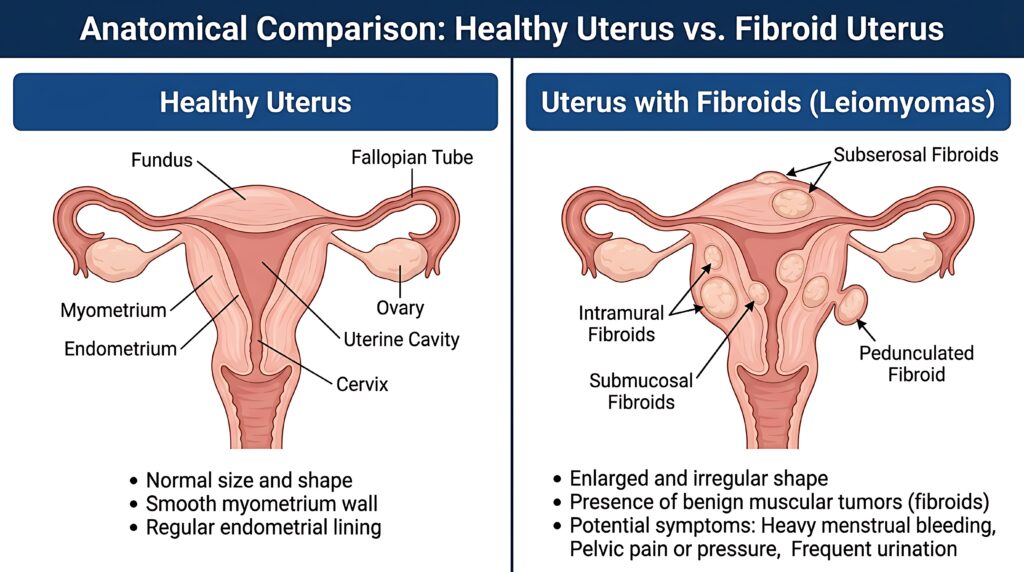
Fibroids Awareness Month is a time to shine a light on one of the most common yet often overlooked women’s health conditions. Uterine fibroids are noncancerous growths that develop in or on the uterus, affecting millions of women during their reproductive years. While some women never experience symptoms, others may struggle with heavy or prolonged menstrual bleeding, pelvic pain or pressure, frequent urination, lower back pain, painful intercourse, or difficulty becoming pregnant. Because these symptoms are sometimes dismissed as “normal,” many women live with discomfort for years before seeking care. Understanding what fibroids are and recognizing the signs is the first step toward improving quality of life.
Recognizing the Signs
Although the exact cause of fibroids is still being studied, factors such as hormones, genetics, age, and family history are believed to contribute to their development. Black women are disproportionately affected, often developing fibroids at younger ages and experiencing larger or more numerous fibroids with more severe symptoms. If you notice changes in your menstrual cycle, ongoing pelvic discomfort, or symptoms that interfere with your daily life, don’t ignore them. A healthcare provider can evaluate your symptoms through a pelvic exam and imaging, such as an ultrasound, to determine whether fibroids are the cause. Early diagnosis can provide more treatment options and help prevent complications.